April 5, 2026
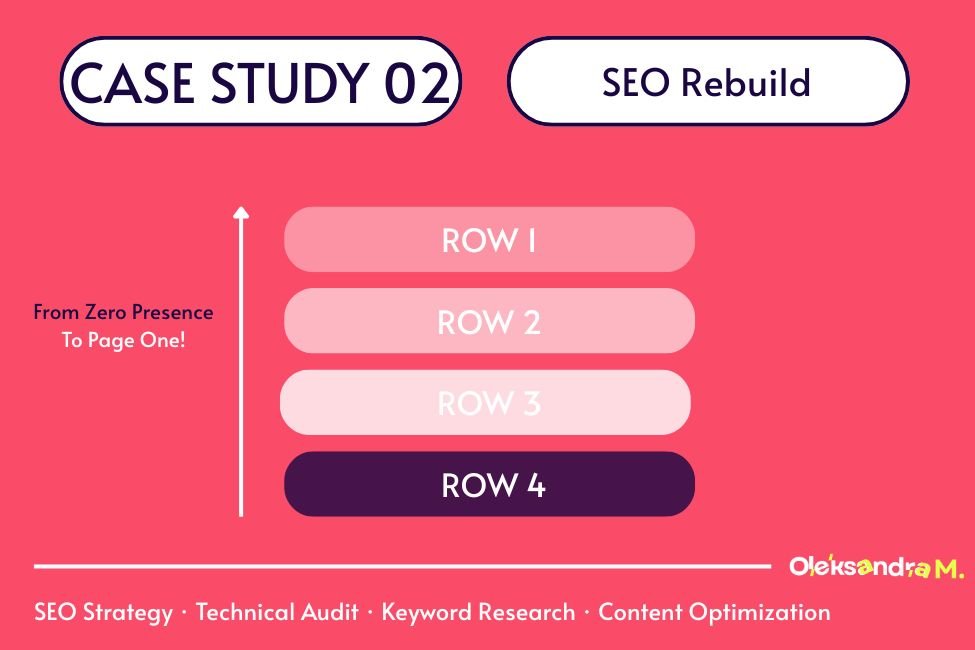
Nobody finds you on Google by accident. Here is exactly how I changed that.
You know what is genuinely fascinating about local businesses and their relationship with Google?
Most of them think they have an SEO problem. What they actually have is a visibility problem. And those two things sound like the same thing but they are completely different diagnoses with completely different solutions.
An SEO problem means you are competing and losing. A visibility problem means Google does not know what to do with you yet. One requires optimization. The other requires a rebuild from the ground up.
This client had a visibility problem. The website existed. Pages were live. Someone had put time into building it. But from Google’s perspective the site was speaking a language nobody had taught it to read properly. No Search Console connection. No sitemap. Technical errors everywhere. A Google Business Profile that had been set up once and then completely abandoned. Content that was written about the business rather than for the person searching for it.
The gap between existing and being found is wider than most people think. Here is how I closed it in two to three months.
DAY 1: The Audit
Before I touched a single thing on this site I needed to understand exactly what Google was seeing when it looked at it. Not what the client thought Google was seeing. Not what the site looked like to a human visitor. What the actual crawl data, technical health, and search performance numbers were telling me.
This is the part most people skip or rush. They see a problem and immediately want to fix it. But fixing things without understanding why they are broken is how you spend three months optimizing the wrong things while the real issues keep compounding.
So Day 1 was entirely observation. Every item below was assessed before a single change was made:
The Core Web Vitals score was the first thing that genuinely surprised me. Not because failing Core Web Vitals is rare but because this particular failure was happening before anyone had even thought about keywords or content. In March 2024 Google replaced FID with INP as a ranking metric. INP is not about page load speed. It is about how fast your page reacts when a user actually does something. Clicks a button. Opens a menu. Taps a link. This site was failing it badly and nobody knew because nobody had looked.
The Google Business Profile situation was somehow worse. It existed. Someone had created it at some point. And then it had been completely forgotten. For a local business that is not just a missed opportunity. That is your most direct line to appearing in the local pack sitting completely unused.
Screaming Frog crawled the site and came back with over 200 errors. Broken links. Redirect chains going nowhere. Missing meta descriptions. Pages with duplicate title tags. The kind of technical accumulation that happens when a site grows without anyone actively maintaining it.
Two hundred errors. On a site that was not ranking for anything.
That is where we started.
WEEK 1 TO 2: The Strategy
Here is something I believe about keyword research that most people would disagree with.
Volume is not the starting point. Confusion is.
When someone types something into Google they are not performing a search. They are asking a question. Sometimes that question is clear and direct. Sometimes it is messy and half formed. Sometimes they do not even know exactly what they are looking for and the search is their way of figuring it out.
The tool that changed how I approach this completely is Answer The Public. Not because it does something technically complicated. Because it shows you the questions real people are actually asking in the exact language they use to ask them. Across Google, YouTube, TikTok, Bing, and Reddit simultaneously.
And since Google’s March 2024 Core Update this matters even more. Because social media posts are now indexed and ranked in regular Google search results. So every question Answer The Public surfaces is not just a website content opportunity. It is a social post opportunity. Two completely different content surfaces from one piece of research.
I have used a lot of keyword tools. Answer The Public is the only one that makes me feel like I am actually listening to the customer rather than analyzing them.
Once the question map was built from Answer The Public I took it into SEMrush for volume validation. Which of these questions are people actually searching for at meaningful volume. Then into Ahrefs specifically for Content Gap. This is the feature that differentiates Ahrefs from SEMrush at this level of analysis. Content Gap does not just show you keywords in your category. It shows you keyword by keyword exactly what your specific competitors rank for that your site has zero presence on. The opportunity is not theoretical. It is documented.
All of that data went into Google Sheets. Every keyword mapped to a specific page. Every page mapped to a specific position in the pillar architecture. Claude helped structure the priority order so the highest impact opportunities were addressed first and nothing got lost across the three tracks that were about to run simultaneously.
MONTH 1: The Rebuild
Three tracks. Running at the same time. Not one after the other.
This is a deliberate choice and it matters. Waiting to finish technical fixes before starting content means losing weeks of indexing time that you never recover. Google needs time to find new pages, crawl them, and start understanding them. Every day you wait to publish is a day you add to the timeline at the end.
So technical, content, and local all moved together.
The Google Business Profile Insights dashboard deserves its own moment here because it is genuinely one of the most underused data sources in local SEO.
Most people claim the GBP, fill in the business hours, add some photos, and consider it done. What they miss is the Insights tab. Real search queries people used to find the listing. Direction requests showing where customers are coming from. Phone call data. Photo view trends. This is first party intent data for a local business and almost nobody is reading it strategically.
I read it every week and fed the findings back into the content strategy. If people were searching for a specific question that the website was not answering I knew about it within a week and could respond. That feedback loop between GBP Insights and content production is something most local SEO strategies do not have.
The social media piece worked the same way. Answer The Public questions became cluster pages on the site. The same questions also became social posts. Since March 2024 those posts are indexable content. One research session producing ranking signals across multiple surfaces simultaneously.
MONTH 2 TO 3: The Wait And The Watch
Nobody tells you honestly how uncomfortable this part is.
You have done the work. The technical errors are fixed. The content is live. The GBP is optimized. The internal links are in place. And now you have to sit with it while Google processes everything you built and decides what to do with it.
The instinct is to start tweaking. Changing headlines. Adjusting keywords. Adding more content. Touching things that do not need to be touched yet. Resisting that instinct is genuinely one of the harder parts of doing SEO properly.
What you do instead is watch. Google Search Console every morning. Which queries are generating impressions for the first time. Which pages are being discovered. Which keywords are moving from position 40 to position 20 to position 11. The data tells you whether the strategy is working before the rankings fully reflect it. You just have to know what to look for.
During this specific rebuild two major Google Core Updates happened and both of them actually helped rather than threatened what we had built.
The August 2024 Core Update went hard after content that existed purely to rank. Pages that had keywords but no actual utility for the person reading them. Every cluster page on this site had been written around a real question from a real person. Not a keyword. A question. That distinction protected the site while competitors who had been stuffing keywords into generic service pages started dropping.
The March 2025 Core Update was the most volatile update in years. SEMrush tracking data showed a 63% spike in SERP fluctuations. Sites with outdated content dropped even when they had strong backlinks. And this is the part that matters: backlinks now represent just 13% of Google’s ranking algorithm. That number used to be over 50%. Consistent publication of genuinely helpful content is now the top factor. Niche expertise demonstrated through connected content architecture sits at 13% alongside it.
This rebuild was built entirely around those two things. Helpful content and demonstrated niche expertise. Both updates rewarded it.
And then there is the AI Overviews layer that changes what Page One even means right now. As of March 2026 AI Overviews appear in 48% of all searches. Position 1 CTR has dropped up to 61% on queries where an AI Overview is present. Only 38% of pages cited inside AI Overviews also rank in the traditional top 10. Page One is still the goal. But it is the beginning of the conversation now, not the end of it.
Here is every tool that contributed to this rebuild and exactly what each one did:
Eight tools. Each one with a specific job. None of them interchangeable. The stack only works because every tool is doing something the others cannot.
THE RESULT: Page One
Around week six the data started behaving differently.
Not dramatically. Not overnight. Google Search Console started showing impressions on pages that had previously shown nothing. Queries that had never appeared in the performance report were now generating clicks. The SEMrush position tracker showed keywords moving from the 40s and 50s into the 20s and teens.
Then into single digits.
The pillar page reached Page One for the primary service keyword. Cluster pages started ranking for the specific questions Answer The Public had surfaced months earlier. The GBP listing began appearing in the local pack for near me searches which for a local business is often more valuable than any organic ranking.
And then the number that actually matters for a local business started moving. Direction requests and phone calls from the GBP Insights dashboard. Not website traffic. Not impressions. Real people physically navigating to the location and picking up the phone. That is where an SEO rebuild either proves itself or does not.
It proved itself.
The Takeaway
If I had to compress everything this rebuild taught me into one sentence it would be this: Google has spent the last two years making it harder to rank for the wrong reasons and easier to rank for the right ones.
Backlinks used to be everything. Now they are 13% of the algorithm. Keyword density used to matter. Now Google penalizes it. AI generated content at scale used to work. Now it actively hurts you. The March 2024, August 2024, and March 2025 Core Updates all sent the same message in different ways. Build for the human. Answer real questions. Demonstrate genuine expertise. Be technically sound. Show up consistently.
That is not a complicated strategy. It is just one that requires actual work rather than shortcuts.
Local businesses specifically have an advantage most of them are not using. A specific geography means a specific audience with specific questions that a national competitor is too broad to answer properly. Answer The Public surfaces those questions. GBP Insights shows what your actual customers are searching for. The combination of those two data sources alone is more valuable than most paid keyword tools for a local SEO strategy.
Getting to Page One in 2026 also means thinking about AI Overviews because 48% of searches now show one and position 1 CTR has dropped up to 61% when they appear. The goal is not just to rank. The goal is to be the source Google trusts enough to cite.
That trust is built the same way it has always been built. By actually knowing what you are talking about and proving it consistently over time.